


The wetter the better
Water begets life, and life begets water
So in landscaping, water management is a priority
My recent move to Tenerife has left me enamored with the landscape. The diversity of climates and microclimates, from ocean to mountaintop, and from south to north, is incredibly varied and supports a wildly abundant ecosystem. It is actually one of the most diverse lands in Europe! The Canary Islands, and especially the Anaga region of Tenerife, are recognized biodiversity hotspots. The island is home to over 800 endemic species of flora and fauna. For example, the laurel forests (Laurisilva), also known as cloud forests, found in the Anaga and Teno regions, are remnants of ancient subtropical woodlands.
Tenerife, with its diverse microclimates and rich biodiversity, has undergone significant ecological changes over the past centuries. Historically, the island had lush forests and waterfalls (not only seasonally), resembling the green landscapes of other Macaronesian islands a bit more. However, climate change, expansion of thirsty banana plantations, and urban development led to the centralization of water resources through mountain galleries, diverting water away from natural ecosystems. This shift disrupted local hydrological cycles, resulting in drier landscapes, increased wildfire risks, and a decline in biodiversity.
Here’s a better option
To counteract these effects and promote sustainable land management, permaculture offers a suite of water retention techniques tailored to Tenerife’s many unique environments. Implementing these methods on your “finca” (land) can enhance soil moisture, reduce irrigation needs, increase yield amount and quality, and nurture a more resilient ecosystem.
So, when water visits our land, let’s be good hosts. Give water an environment it wants to be in and can stay in for as long as possible, and can return to as soon as possible. Rich soil, plants within their structures, and the shadows they cast, along with mulch and ground cover, and even designated water bodies like garden lakes, can all help welcome water and retain it for our benefit.
Read on to find some water retention techniques you can start implementing on your land today! For larger-scale water management techniques, THIS site is a great starting point.
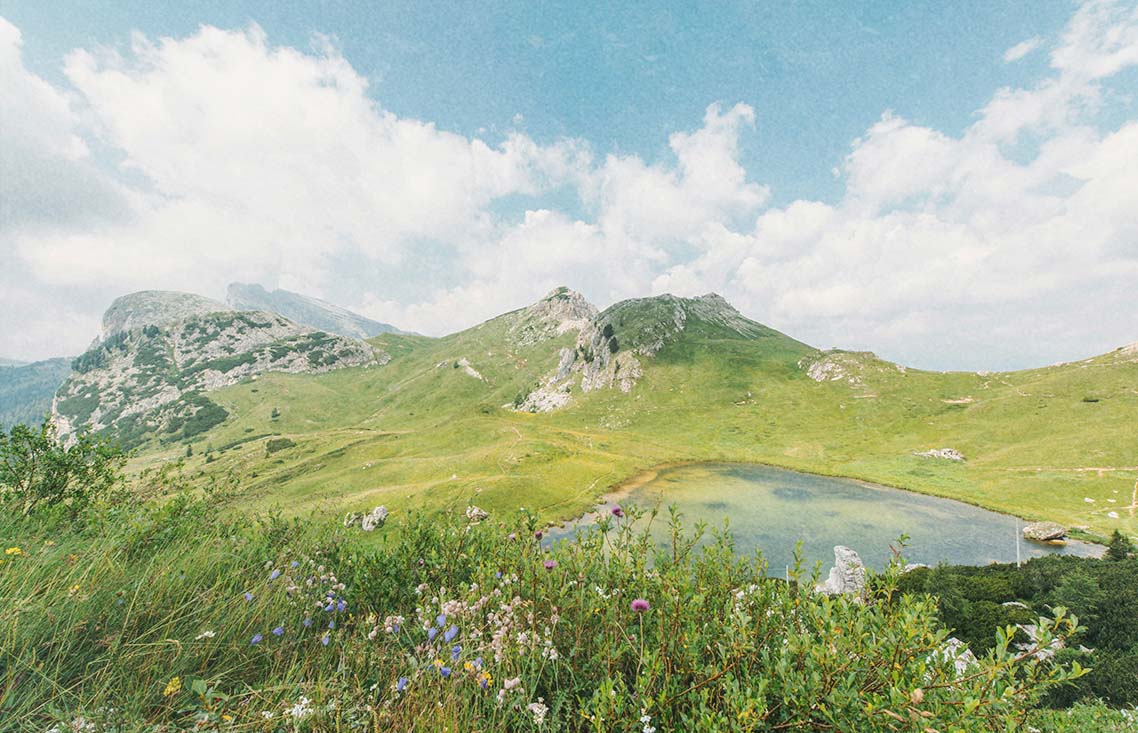
Examples of water retention techniques
Earthworks
One of the best water retention techniques includes earthworks, to form the landscape in a way that it can slow down and hold water easily. Playing with the navigation and speed of water can shape and influence landscapes like nothing else. Based on the function, we can slow it down, speed it up, centralize it, or even spread it out – of course, in line with the already existing conditions, with the least change applied.
01
Swales
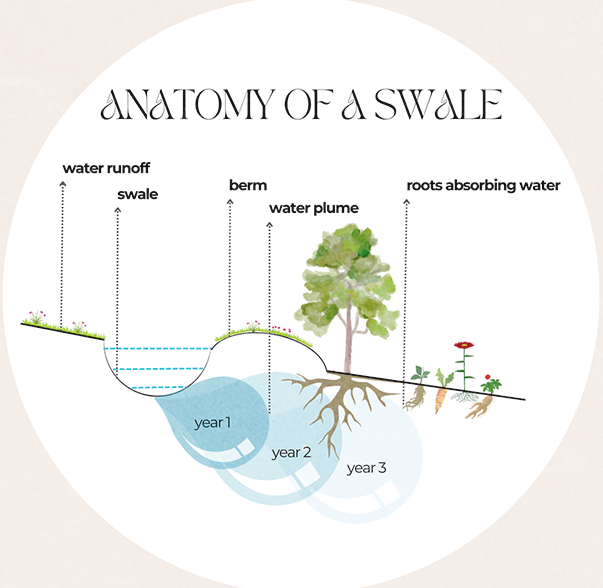
Swales are shallow, horizontal trenches dug along contour lines to capture and slow down rainwater runoff, allowing it to infiltrate the soil. This technique is particularly effective on sloped terrains, and can significantly reduce erosion while enhancing soil moisture. Placing these swales strategically above trees can benefit their growth. This is because the permeated water reaches the roots deeper down in the soil, promoting faster growth due to this more constantly available water reservoir.

02
Terracing
Creating horizontal spaces like terraces on steep slopes helps reduce water runoff and soil erosion. By creating flat areas, terraces allow water to infiltrate into the soil more slowly and more effectively, supporting plant growth and increasing agricultural productivity. The speed of water runoff will become more paced, so the velocity of it won’t result in leaching soil nutrients either. Moreover, a terraced terrain is also more approachable for human use, it is easier to walk around on them, with stairs connecting them.
Soil Health Enhancement
Healthy, living soil acts as a sponge, retaining water and nutrients. Incorporating organic matter, such as compost and mulch, improves soil structure and enhances microbial activity, which in turn improves water retention capacity.
03
Vegetative cover
Maintaining a diverse vegetative cover, including trees, shrubs, and groundcovers, reduces evaporation, shades the soil, and supports the water cycle through transpiration. Deep-rooted plants also help in accessing and stabilizing soil moisture. On top of this, imagine how much water is stored within each plant organism’s tissues. Baobab trees, admittedly an extreme example, can hold up to 120,000 liters in their trunks!


04
Mulching with drip irrigation
Applying mulch around plants conserves soil moisture, suppresses weeds, and regulates soil temperature. The water that would otherwise evaporate without a barrier now has an extra obstacle before leaving the soil. Combining mulch with drip irrigation systems ensures efficient water use by delivering moisture directly to plant roots, minimizing evaporation losses. It is, however, important to place the irrigation lines under the mulch; otherwise, it would be counterproductive.
05
Soil temperature regulation
Shading the soil with plants or mulch helps maintain cooler soil temperatures, reducing evaporation rates and preserving soil moisture during hot periods. Air and surface temperatures under tree canopies can be several degrees cooler than temperatures in the open. Some studies indicate a 12-degree difference compared to unshaded urban environments! Even grass has a similar cooling effect due to its transpiration. Cooler environments result in slower evaporation, too.


06
Permeable surfaces
Using permeable materials for pathways and other surfaces allows rainwater to infiltrate the ground, replenishing groundwater and reducing runoff. Materials like gravel, mulch, or specially designed permeable pavers are effective options. If not necessary, avoid compacting soil too much and using asphalt coverage.
Water preservation
If we already have some water on our land in some shape or form, we have to do our best to retain it and recirculate it as much as the land requires. More often than not, rainwater can be seen to just flow through the lands, down to the neighbour’s or the street canals. Greywater is also usually let go down the drain, mostly because this is seen as the simple and fast solution.
However, the value of this resource is immense. If there is a truly sustainable water management system in place, it reduces watering costs substantially – it will be taken care of automatically.
07
Rainwater harvesting
One of the most common water retention techniques is rainwater harvesting from any surface that allows it, for later use. Collecting rainwater from rooftops into barrels or cisterns provides an additional water source for irrigation. Even small catchment areas can yield significant amounts of water during the rainy season, reducing dependence on external water supplies. Catching and storing this energy source can come especially handy in areas where wet seasons are followed by drier seasons.


08
Greywater recycling
Reusing greywater from sinks, showers, and laundry (using only eco-friendly and biodegradable products) for irrigation can conserve freshwater resources and prolong the use of this valuable water by adding a second purpose: watering the garden. Properly designed greywater cleaning systems should include relevant filters for the contaminants (such as soap, detergent, oils, food leftovers, skin tissues etc.), for example pebbles, plant roots and grease traps. Like this, they can safely distribute this used water to plants, enhancing soil moisture without harming the environment.
09
Rain gardens
Rain gardens are shallow, planted depressions that collect and absorb runoff from impermeable surfaces, such as roofs and driveways. They help in filtering pollutants, recharging groundwater, and providing habitat for beneficial organisms. A common example is a sidewalk and streetside gutter combo, where the rainwater would flow straight into the channel. This can be replaced by a beautiful green patch of water-loving plants, which would be there soak up as much water as possible, prolonging its stay on the premises.


10
Ponds and water features
Creating ponds or other water features can serve as water reservoirs, support biodiversity, and contribute to local microclimates by increasing humidity and moderating temperatures. It is also a great feature to combine with other functions, such as a final cleaning station for grey water, or serving as a water tank as well for water from the galleries. (In Tenerife, the water that’s used on farms is sourced and bought from the mountains’ water galleries in shares, usually collected monthly and stored before use.)
Let’s get started!
Adopting these water retention techniques not only enhances the sustainability and productivity of your land or finca but also contributes to the broader ecological restoration of Tenerife. By working with the island’s natural systems, you can help revive local water cycles, support biodiversity, and create a resilient landscape that thrives even in the face of climate challenges.
Implement these water retention techniques on your finca, and take these simple steps to help the climate stability of the island. First, you’ll notice the change on your plants and agricultural products, then on your land overall, and thirdly, you might even positively influence your neighbours and larger parts of the island. Start now, and reap the results sooner than you expect!
Let’s Talk GET IN TOUCH Let’s Talk GET IN TOUCH Let’s Talk GET IN TOUCH Let’s Talk GET IN TOUCH

„Be water, my friend.”
Bruce Lee