Permaculture Premium
Syntropic Gardening
Giving Nature a Well-Deserved Boost
There is something very satisfying about watching an ecosystem build itself. But there is something even more satisfying about realising that you can help it along. I work on a farm in Tenerife where we use syntropic gardening principles, and one of the things that has impressed me most is how quickly these systems can transform.
Before seeing it in practice, I understood the theory: succession, layers, biomass, pruning, plant relationships, soil regeneration. But seeing it happen in real life is different. You plant what can look like a fairly unimpressive collection of seedlings and seeds, and a couple of years later, you’re walking through something that already feels like a young forest. It is lush, productive, full of life, and, perhaps surprisingly, it is stunning.
What really struck me as a permaculture designer is that syntropic gardening doesn’t ask us to wait for nature to slowly do everything by itself. It asks us to understand how nature builds abundance, and then actively participate in this natural process.
Let’s be the best support system we can be
Nature has a strategy
Syntropic gardening works with it
Syntropic farming, associated particularly with the work of Ernst Götsch, is based around a simple observation: nature doesn’t stay still, an ecosystem is constantly changing.
Bare ground becomes colonised by plants. Fast-growing species appear first. They change the conditions around them. More demanding plants can then establish. Layers develop. Biomass accumulates. Shade increases. The soil changes. Eventually, a much more complex and stable system emerges. This process is known as ecological succession.
In conventional agriculture, we often try to hold a system at one particular moment. We remove plants we didn’t intentionally put there. We keep the soil bare. We separate crops. We control competition. We try to keep everything exactly where we want it.
In many permaculture gardens, I see people take almost the opposite approach, simply “letting nature do its thing.” They wait and observe, often hesitant to intervene, as though any human input might disrupt or diminish the natural process.
Syntropic systems, in my view, represent a healthier middle ground. Instead of fighting succession or stepping fully back from maintenance, they use succession as a design tool. You intentionally plant species that belong to different stages of succession and different vertical layers, allowing them to develop together. The result is not a static plantation, but a system that is constantly moving, changing and developing.
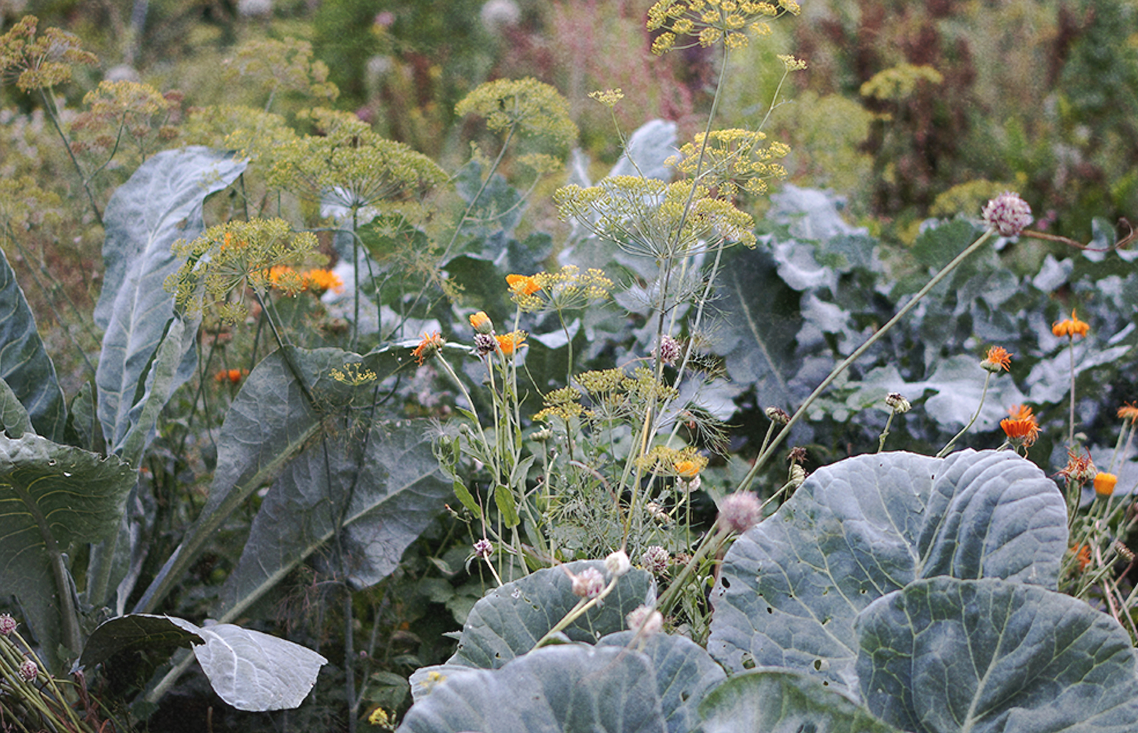
„The laws (of nature) are given, it isn’t up to us to create or modify any of them. We need to act in a beneficial way for all participants, for all the affected ones, in order to be considered useful and welcomed beings in the system.”
Ernst Götsch
Rapid regeneration
From seeds to system
This is where my experience on the farm really changed how I think about it. You can read about agroforestry and ecological succession all day, but watching a syntropic system develop in front of you makes the concept much more tangible.
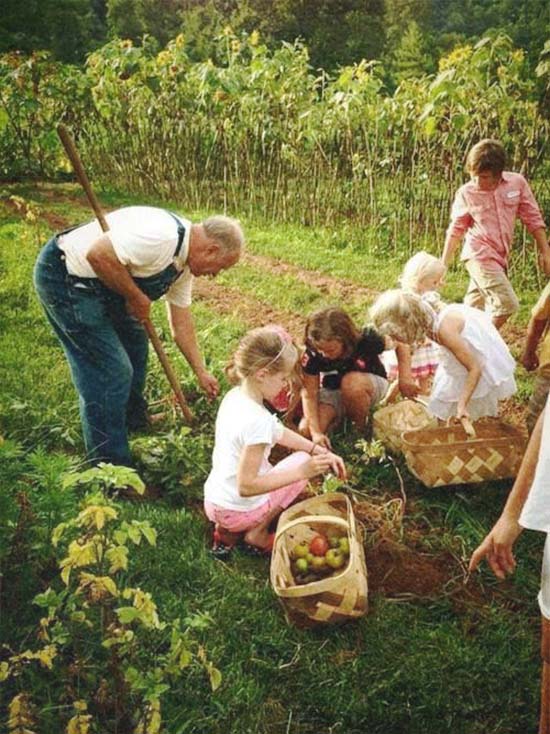
Within roughly two to three years (instead of decades, this is crazy fast!), a system can go from seeds and young plants to something that genuinely resembles a young, functioning ecosystem. Of course, this doesn’t mean every fruit tree is suddenly mature and producing at its maximum. But the system is already there. There is structure, layers, shade, groundcover, biomass, relationships between plants, increasingly active soil, and there is already production.
That speed is one of the things I find most exciting about syntropic agriculture. We often think of ecological restoration as something inherently slow. And yes, mature forests take time. But establishing the foundations of a functioning ecosystem doesn’t necessarily have to take decades. If you understand what plants need from one another and how ecosystems develop, you can accelerate the process considerably.

Don’t just plant companions
Design a community
One of the most important principles is that plants shouldn’t be selected individually. You aren’t simply asking: Which fruit trees do I want? You’re asking: Which plants should grow together to help one another establish?
A fruit tree might benefit from temporary shade while it is young. A fast-growing tree might provide that shade. Another plant might produce large amounts of biomass that can later be pruned and returned to the soil. A nitrogen-fixing species can contribute to the fertility of the system. Groundcovers protect the soil. Flowering plants attract pollinators and beneficial insects. Climbers use vertical space. Different root systems explore different parts of the soil. Suddenly, your planting isn’t a collection of individual species. It is a community with different jobs.
And importantly, those jobs can change over time. A plant that is extremely useful in year one might become unnecessary in year five. A fast-growing tree might initially be there to create shade and biomass, while the slower-growing fruit tree underneath it establishes. Eventually, the fruit tree may become the important one. The system changes, and the planting is designed to change with it.
Forest gardens
The power of layers
Walk through a forest and you’ll notice something immediately. It isn’t flat. There are enormous trees above you, smaller trees beneath them, shrubs below those, herbs closer to the ground and plants covering the soil. There are also climbers moving vertically through the system.
Syntropic gardening deliberately works with this kind of stratification, much like permaculture forest gardens do. Both approaches recognise that nature doesn’t organise itself in rows or monocultures, but in overlapping layers where different species occupy different ecological niches and support one another.
The key difference is often in intensity and intention. Forest gardens tend to establish a relatively stable, long-term edible ecosystem and then let it mature with minimal disturbance. Syntropic systems, on the other hand, actively manage succession through planting density, strategic pruning and biomass cycling, meaning the structure is not only layered but also constantly evolving.
Instead of filling a piece of land with one crop occupying one layer, you can stack functions and production vertically. A single patch of land can contain a canopy tree, smaller fruit trees, shrubs, herbs, groundcovers and climbers, all occupying different ecological roles and timeframes within the system.
Permaculture Perspective
Pruning
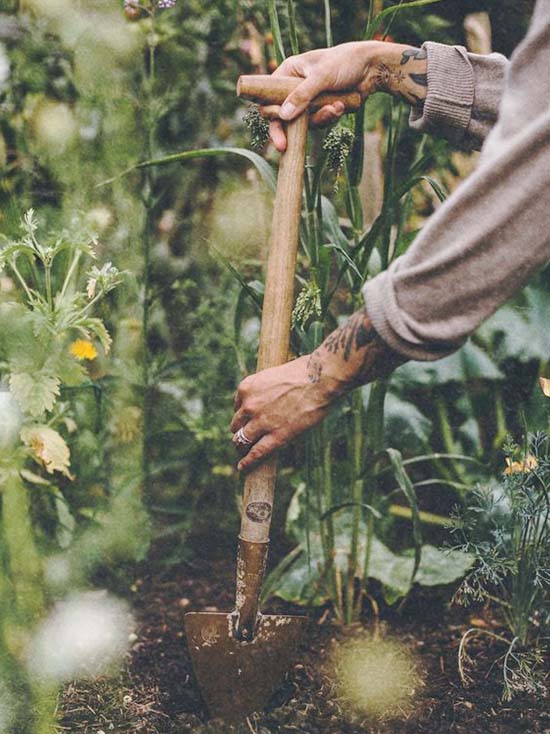
This is probably one of the strangest parts of syntropic gardening for anyone coming from a different gardening background. You grow plants… And then you cut them. A lot. But the pruning isn’t simply about keeping things “tidy”. It is one of the main ways you actively manage the system.
Plants respond to pruning through changes in their growth patterns and hormonal signalling. Removing growing tips can alter apical dominance and encourage new growth, and the effects don’t stop with the individual plant. Pruned material and root activity also contribute to chemical signalling in the soil that neighbouring plants can detect, often accelerating their own growth and development. When this material is returned directly to the soil as mulch, it becomes part of that shared biochemical environment. Pruning at the right stage, especially before a plant has invested heavily in flowering or fruiting, can also redirect a plant’s energy away from reproduction and into vegetative growth, helping it establish faster and become more resilient in the long term.
So pruning becomes much more than cutting back a plant. It becomes a way of steering succession.
Feeding the soil
Growing biomass
Some plants are grown not because we want to eat them, but because we want them to grow. Fast. They produce enormous amounts of biomass, which can then be cut and placed back onto the soil. Instead of thinking of fallen leaves, branches and plant material as waste, syntropic gardening treats them as part of the fertility cycle.
The plants are essentially capturing sunlight and turning it into organic matter. You then return that organic matter to the soil. The soil organisms break it down. The nutrients cycle. The soil food web becomes more active. And the system gets better at supporting itself.
So the pruned material becomes part of the system again. The branches and leaves that you cut become food and habitat for decomposers. They protect the soil surface. They add organic matter. They help retain moisture. And as they decompose, nutrients are gradually returned to the system. The pruning also changes the structure of the garden itself. More light can reach lower layers. Shade can be adjusted. Competition can be managed. Different plants can be encouraged at different stages.
You are not simply feeding the plants. You are building the conditions in which the plants can feed themselves.


„The byproduct of producing food is wood and good soil.”
Ernst Götsch
Syntropic Perspective
Working with Nature
It doesn’t mean waiting for nature
Working with nature doesn’t mean waiting for nature.
This is perhaps the biggest lesson I have taken from working with syntropic systems as a permaculturist. “Working with nature” can sometimes be interpreted as leave everything alone and let nature take over. But a garden or farm is not a wild ecosystem. We have goals with it, especially if we are planning to live there ourselves also. We want food, beautiful landscapes, healthy soil, shade, water, biodiversity, and ecosystems to establish within a reasonable timeframe. So why not actively help?
We can observe how nature builds systems and then use that knowledge to support the process. We can plant densely. We can combine species strategically. We can create layers. We can introduce fast-growing plants. We can prune them. We can return their biomass to the soil. We can manage light and shade. We can constantly observe what is happening and adjust our interventions accordingly.
Syntropic gardening isn’t controlling nature, it’s participating in it. And perhaps that is what makes syntropic gardening so exciting. You aren’t trying to make nature behave according to an artificial system. You’re learning its language well enough to give it a little push in the right direction.
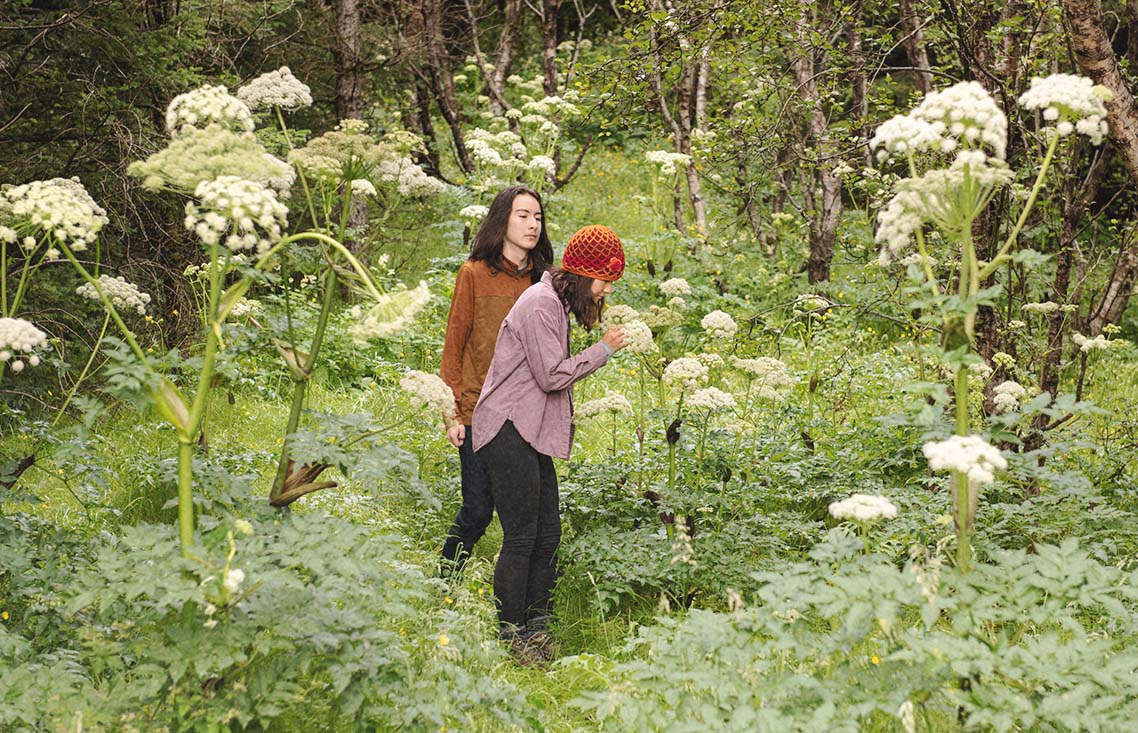
My Perspective on Syntropic Gardening
Art with Nature
What does this mean for a garden?
This is where my own perspective as a designer comes in. The more I see syntropic systems developing, the more I wonder why we separate “productive” gardens from “beautiful” gardens in the first place.
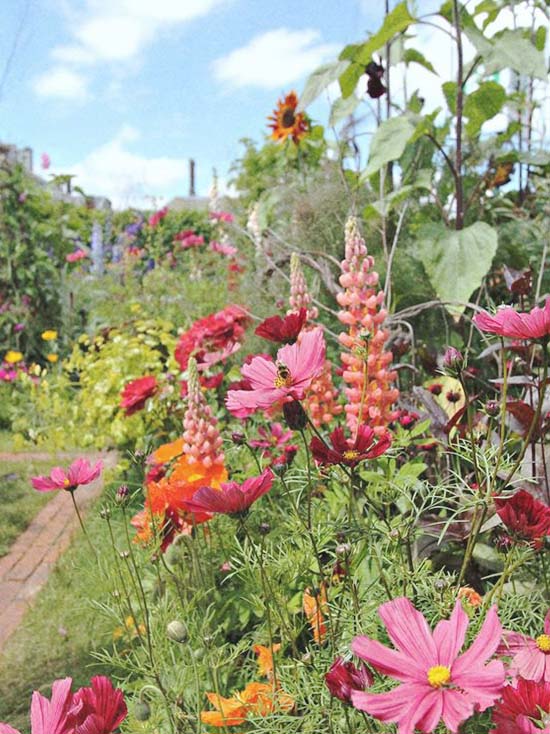
A syntropic system can be incredibly lush and visually complex. It can have flowering plants, different shades of green, beautiful tree forms, groundcovers, climbers and changing seasonal textures. And it can produce food. So instead of creating a conventional vegetable garden and then putting an ornamental garden somewhere else, why not design the whole landscape as a living, productive ecosystem?
Your fruit trees don’t have to look like a fruit orchard. Your edible plants don’t have to announce themselves as crops. Your biomass plants don’t have to be ugly. A garden can be beautiful because it is productive, rather than beautiful despite being productive. That is an idea I increasingly want to bring into garden design.
We can give the system exactly the kind of support it needs at each stage. And then step back and watch it respond. Because sometimes working with nature doesn’t mean getting out of the way. Sometimes it means giving nature a well-deserved boost.

Let’s Talk GET IN TOUCH Let’s Talk GET IN TOUCH Let’s Talk GET IN TOUCH Let’s Talk GET IN TOUCH